


Quick Answer
NAD+ and NADH are two interchanging forms of nicotinamide adenine dinucleotide, a niacin-related coenzyme. NAD+ accepts electrons during metabolic reactions; NADH—the reduced form of nicotinamide adenine dinucleotide—carries and donates those electrons, including to the mitochondrial electron-transport chain that helps produce ATP. They function as a pair, so neither form is universally “better.” The original Tennant Products article emphasized NADH, cellular energy, methylation, and Dr. Tennant’s® Restore. Those themes are preserved here, with product and broad health statements clearly identified for current label, evidence, and compliance review.
NAD+ and NADH at a Glance
- NAD+ is the oxidized form. It accepts electrons in reactions such as glycolysis and the citric-acid cycle.
- NADH is the reduced form. It carries those electrons and can donate them to other reactions, including the electron-transport chain.
- The NAD+/NADH cycle supports ATP production. ATP is often described as the cell’s energy currency because it transfers usable energy to cellular processes.
- Balance matters. Cells continually cycle between NAD+ and NADH as metabolism changes.
- Supplement conclusions require care. A molecule’s biochemical role does not by itself establish that taking it as a supplement will produce a particular health outcome.
What Is NAD+?
NAD+—nicotinamide adenine dinucleotide—is the electron-accepting, oxidized member of the pair. It participates in reactions that extract energy from nutrients. When NAD+ accepts electrons and hydrogen, it becomes NADH.
The original article described NAD+ as a lower-energy form involved in catabolic reactions such as glycolysis and the citric-acid cycle. That basic electron-carrier explanation remains useful, provided it is understood as simplified biochemistry rather than a ranking of one form over the other.
What Is NADH?
NADH is the reduced form of nicotinamide adenine dinucleotide and the electron-rich form of the same niacin-related coenzyme. It can donate electrons to the mitochondrial electron-transport chain, helping establish the conditions used to make ATP. It is not simply “bioavailable vitamin B3.”
How the NAD+/NADH Cycle Supports Cellular Energy
During glycolysis and the citric-acid cycle, NAD+ accepts electrons and becomes NADH. NADH then carries electrons to the electron-transport chain. This sequence contributes to ATP generation, which supports energy-requiring work throughout the body—including muscle contraction, nerve signaling, biosynthesis, and temperature regulation.
This preserves the original article’s central “cellular energy” story while clarifying that NAD+ and NADH work together. It is not simply a one-way conversion in which the reduced form is always preferable.
Redox Reactions and Metabolic Balance
The original article correctly centered electron transfer and redox reactions. “Redox” describes paired reduction and oxidation: one molecule gains electrons while another loses them. The ratio of NAD+ to NADH varies among cellular compartments and helps influence which metabolic reactions can proceed.
The article connects NADH with normal brain, cardiovascular, immune, liver, and kidney functions. Because these tissues depend on energy metabolism, supporting cellular NADH is presented as supporting focus, memory, circulation, normal immune activity, oxidative balance, liver cleansing processes, and kidney waste removal. These are positive support statements, not guaranteed treatment outcomes.
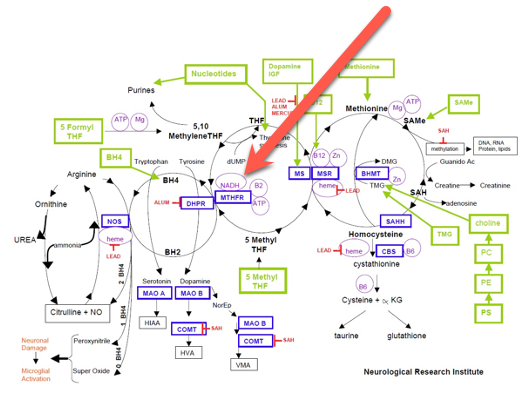
What About NADH and Methylation?
The legacy article gives methylation a prominent role, and that context remains part of the narrative. NADH is not described as a methyl donor or as being “further down the methylation cycle.”
NADH, Bioavailability, and Supplements
Bioavailability describes the amount and rate at which a substance becomes available for use after administration. Supplemental NADH requires fewer conversion steps and may be especially useful for people with methylation difficulties, as presented in the original article. This preserves the original bioavailability narrative without guaranteeing a particular response.
Dr. Tennant’s® Restore and the Original Product Narrative
Earlier Restore materials described the formula as providing PANMOL® NADH within a bioavailable, methylated formula. Because formulations can change, refer to the current product label for the most up-to-date ingredient information.

The original collection link is retained as an internal-link candidate, not asserted as currently correct: https://tennantproducts.com/collections/restore.
Bottom Line
NAD+ and NADH are complementary forms of a coenzyme central to electron transfer and cellular energy metabolism. NAD+ accepts electrons; NADH carries them. The Dr. Tennant’s® cellular-energy story emphasizes bioavailable NADH and Restore as nutritional support for energy production, normal organ function, antioxidant balance, and cellular maintenance.
FAQ
Is NADH the same as vitamin B3?
Not exactly. The body uses vitamin B3 forms as precursors to make NAD-related coenzymes. NADH is the reduced form of NAD, not simply another name for niacin.
What is the main difference between NAD+ and NADH?
NAD+ accepts electrons; NADH carries and donates electrons. Cells cycle between them during metabolism.
Does NADH directly give the body energy?
NADH participates in reactions that help cells make ATP. That biochemical role is different from proving that an NADH supplement improves energy or treats fatigue.
Is NADH “better” than NAD+?
Not as a general biological rule. Both forms are required and interconvert. Comparisons between supplements require evidence specific to their forms, delivery, stability, and labeled use.
Does Dr. Tennant’s® Restore contain NADH?
The legacy article says it contains PANMOL® NADH. Confirm the current label, ingredient form and amount, active variants, and approved wording before publication.
Source List Preserved from the Live Article
- NCBI/PMC: https://www.ncbi.nlm.nih.gov/pmc/articles/PMC5966847/
- NAD.com comparison page: https://www.nad.com/nad-vs-nadh
- Concierge MD LA comparison page: https://conciergemdla.com/blog/difference-between-nad-nadh-and-nad-plus/
- EMBO Molecular Medicine, “NAD+ in human health and disease”: https://www.embopress.org/doi/full/10.15252/emmm.202113943
- NCBI/PMC exercise review: https://www.ncbi.nlm.nih.gov/pmc/articles/PMC3423123/
- Existing PANMOL® PDF asset: https://cdn.shopify.com/s/files/1/2796/2834/files/Panamol_NADH_Biography.pdf?v=1709837971
The two commercial/clinic explainers are preserved as part of the original source list.


